

Service Details
Overview
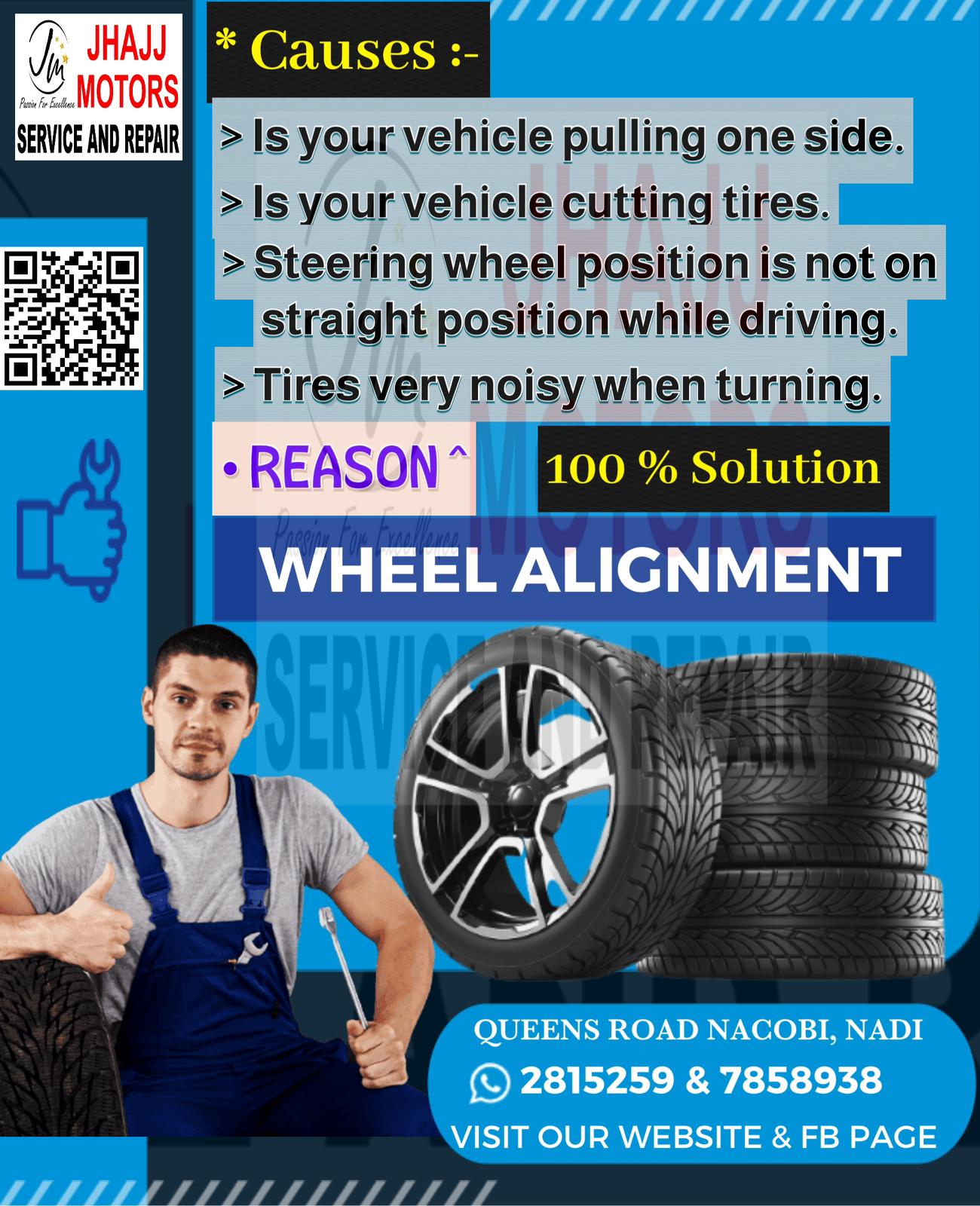
In wheel alignment, the objective is to ensure that the wheels of a vehicle are aligned properly according to the manufacturer’s specifications. Here are the key tasks involved in wheel alignment:
Initial Inspection: The alignment process typically begins with an initial inspection of the vehicle’s tires, suspension, and steering components. This helps identify any visible signs of misalignment, such as uneven tire wear, pulling to one side, or steering wheel vibration.
Adjustment of Camber, Caster, and Toe: The three main alignment angles that are adjusted during wheel alignment are camber, caster, and toe. Camber refers to the inward or outward tilt of the wheels when viewed from the front. Caster refers to the angle of the steering axis when viewed from the side. Toe refers to the angle at which the tires point inwards or outwards when viewed from the top. These angles are adjusted using specialized equipment and tools to bring them within the recommended specifications.
Measurement and Adjustment: Alignment equipment is used to measure the current alignment angles of the wheels. This is done by attaching sensors to the wheels and using laser or camera technology to accurately measure the angles. Based on the measurements, adjustments are made to the camber, caster, and toe angles as necessary.
Centering the Steering Wheel: During the alignment process, the technician ensures that the steering wheel is centered properly when the vehicle is traveling in a straight line. This is done by adjusting the tie rods or steering linkage if needed.
Test Drive and Final Inspection: After the adjustments are made, a test drive is typically performed to verify that the vehicle handles properly and no further issues are present. Additionally, a final inspection is conducted to ensure that all alignment angles are within the specified range.
Documentation: Throughout the wheel alignment process, detailed documentation is maintained, including the initial measurements, adjustments made, and final alignment readings. This documentation helps track the vehicle’s alignment history and provides a reference for future alignments.
It is important to note that wheel alignment should be performed by qualified technicians using specialized equipment. Proper wheel alignment helps optimize tire life, improve vehicle handling and stability, and reduce tire wear and fuel consumption. It is recommended to have wheel alignment checked regularly or whenever there are signs of misalignment to ensure the vehicle’s optimal performance and safety.
Our JMPL team is ready for high quality services so book your appointment with us.